From Plan to Practice: Making Change Work in Radiotherapy Teams
From Plan to Practice: Making Change Work in Radiotherapy Teams
Change is constant in radiotherapy departments. New treatment protocols, new software tools, updated QA processes, and revised clinical guidelines are regularly introduced. Yet even well-designed initiatives often fail to fully embed or take too long to implement.
It's not due to a lack of commitment or expertise. The challenge is turning a plan or protocol into consistent practice across a busy, multidisciplinary team.
Why Change Can Stall in Radiotherapy
Radiotherapy departments are complex: multiple roles, strict regulatory requirements, and tightly scheduled treatments. For example, implementing a new protocol requires every team member to understand, adopt, and follow the updated process.
Common obstacles include:
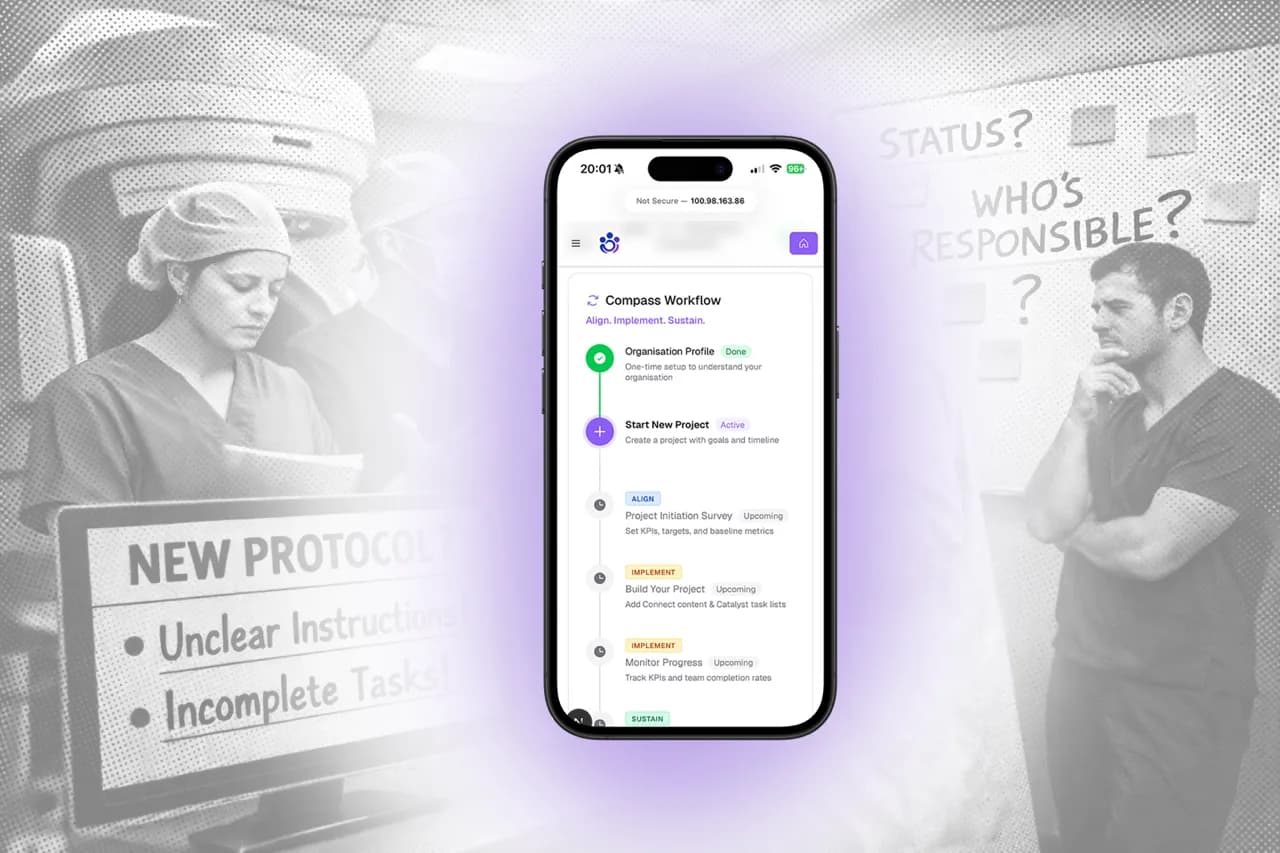
- Unclear responsibilities – Who is accountable for each step of the new protocol?
- Fragmented communication – Emails, PDFs, and meetings can leave team members with different interpretations.
- Limited progress visibility – Supervisors may struggle to see whether the change is actually being adopted.
- Knowledge gaps – Best practices may exist only in certain team members' experience.
- No structured tracking – There's often no way to monitor adoption or completion across the department.
Even minor protocol updates can take weeks to embed if these challenges aren't addressed, leading to variation, confusion, or risk.
How Software Can Support Change Implementation
AyniHealth is designed to help teams manage departmental change initiatives effectively. It provides a central platform for teams to:
Align
Define the change clearly – assign ownership, clarify goals, and outline each step of the new protocol.
Implement
- Monitor progress – Visual dashboards make it easy to identify bottlenecks and keep the initiative on track.
- Track adoption – See who has completed the implementation tasks, and where support is needed.
Sustain
Capture learning – Document lessons from the rollout so future initiatives are easier to implement.
Instead of relying on informal communication or static documents, departments have a single source of truth for implementing change. This ensures that new protocols are adopted consistently, efficiently, and safely.
Making Change Stick
Successful change in oncology departments is about more than introducing a new protocol — it's about embedding it into everyday practice. Software that structures the rollout process gives teams the clarity, accountability, and visibility they need.
For example, a department introducing a new QA procedure can assign clear ownership of each step, track completion across shifts, and flag areas where additional training or support is needed. Lessons learned during the rollout can be recorded and reused, making future changes smoother.
By focusing on managing change initiatives, teams can implement updates faster, reduce variation, and improve overall workflow reliability.
Why This Matters Now
Radiotherapy departments are under pressure to implement new protocols safely and efficiently, while maintaining patient safety and meeting regulatory requirements. Without structured support, even small changes can take weeks to embed, creating inconsistency and risk.
Software platforms like AyniHealth give clinical teams a practical way to manage change within their department. By aligning the team, tracking progress, and capturing lessons learned, change becomes visible, manageable, and sustainable.
When change works in practice, everyone benefits: teams are confident, protocols are consistently followed, and patient care is strengthened.